
Best Pool Supplies Distributor in China

NEWS

Home > Tips

QQ截图20230417161556

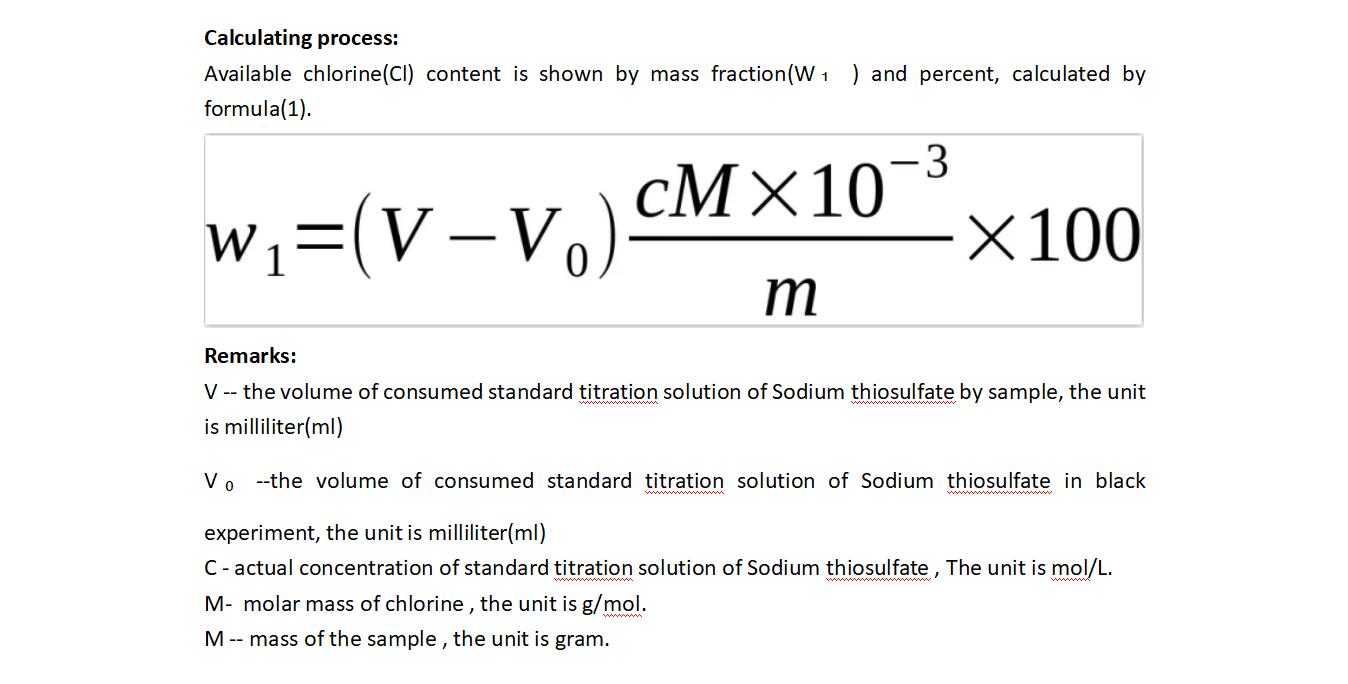
Determination of Available Chlorine Content in Trichloroisocyanuric Acid by Titration

Required materials and tools 1. Soluble starch 2. Concentrated sulfuric acid 3. 2000ml Beaker 4. 350ml beaker 5. Weighing paper and electronic scales 6. Purified water 7. Sodium thiosulfate analytical reagent Preparing stock solution of sodium thiosulfate Measure 1000ml purified water by using 500ml measuring cups twice and pour it into a 2000ml breaker. Then pour a whole bottle of sodium thiosulfate analytical reagent into the beaker directly, Put the beaker on the induction cooker until the solution boils for ten minutes. After that, Keep it cool, and still for two weeks, then filter it to get the stock solution of sodium thiosulfate. Preparing 1+5 sulfuric acid Measure 750ml purified

TCCA: The Key to Effective Wool Shrinkage Prevention

Trichloroisocyanuric Acid (TCCA) is a popular chemical used in the textile industry to prevent wool shrinkage during the washing process. TCCA is an excellent disinfectant, sanitizer, and oxidizing agent, making it ideal for wool treatment. The use of TCCA powders and TCCA tablets in the textile industry has increased in recent years due to their effectiveness and ease of use. Trichloroisocyanuric acid suppliers have reported a surge in demand for TCCA powders and tablets in the wool industry. The global demand for wool products has increased, leading to a rise in the need for wool treatment chemicals. TCCA is an ideal choice for wool treatment because it is safe, cost-effective,

Transforming the Textile Industry: Polyacrylamide’s Role in Sustainable Dyeing and Finishing Processes

The textile industry is undergoing a significant transformation as sustainability becomes a top priority. Amidst growing concerns about environmental impact, industrial players are seeking innovative solutions to reduce their carbon footprint and promote sustainable practices. One such solution that is revolutionizing the textile sector is Polyacrylamide (PAM), a versatile industrial water treatment chemical. In this article, we delve into the role of Polyacrylamide in sustainable dyeing and finishing processes, exploring how it is reshaping the textile industry. Polyacrylamide is a polymer derived from acrylamide monomers. It has a wide range of applications, including water treatment, papermaking, oil recovery, and more. In the textile industry, Polyacrylamide plays a crucial role in

Aluminum Sulfate Revolutionizes Industrial Wastewater Treatment

In a groundbreaking development for the field of wastewater treatment, aluminum sulfate, a versatile chemical compound, is garnering significant attention for its effective and sustainable application in treating industrial wastewater. With the increasing concern over environmental pollution caused by industrial activities, the utilization of Aluminum Sulfate as a key solution is revolutionizing the industry’s approach to tackling this pressing issue. Industrial wastewater, generated from various manufacturing processes, often contains hazardous substances, heavy metals, and organic compounds. The conventional methods of treating such wastewater have faced limitations in terms of efficiency, cost-effectiveness, and environmental impact. However, recent advancements in the application of aluminum sulfate have shown remarkable potential in overcoming these

Trichloroisocyanuric Acid (TCCA) Emerges as an Effective Fumigant for Farming Facilities

In a remarkable breakthrough for the agricultural industry, Trichloroisocyanuric Acid (TCCA), a potent and versatile disinfectant, has recently gained significant recognition as a highly effective fumigant for farming facilities. Developed and manufactured by leading experts in the field, TCCA has emerged as a game-changing solution that helps safeguard the health and well-being of livestock, while simultaneously addressing the pressing concerns of farmers regarding biosecurity and disease prevention. TCCA, derived from cyanuric acid and widely used in disinfection processes, has proven to be an indispensable tool for combating pathogens and eliminating harmful microorganisms within farming environments. Its efficacy lies in its ability to rapidly disinfect surfaces, equipment, and water sources, effectively

The Application of Polyacrylamide in Fish and Shrimp Farming

Polyacrylamide, a versatile compound, has found significant applications in various fields. In the realm of aquaculture, polyacrylamide has emerged as a valuable tool for optimizing water quality and promoting the healthy growth of fish and shrimp. In this article, we explore the diverse applications of polyacrylamide in fish and shrimp farming, highlighting its benefits and contributions to sustainable aquaculture practices. Polyacrylamide is a water-soluble polymer that forms colloidal suspensions. Its unique chemical properties make it an excellent choice for water treatment and environmental applications. In aquaculture, maintaining optimal water quality is crucial for the well-being and growth of fish and shrimp. Polyacrylamide plays a vital role in water quality management