Best Pool Supplies Distributor in China

NEWS

Home > Tips

swimming pool Algaecide

How to Find the Best Pool Algaecide for Your Swimming Pool

Are you looking for a reliable Pool Algaecide to keep your swimming pool free of algae and bacteria? With so many options on the market, it can be difficult to decide which one is best for your needs. Read on to learn more about selecting the ideal pool algaecide for your pool maintenance routine. Choose an Algaecide Based on Your Pool’s Size and Type. The size and type of swimming pool you have will largely dictate which algaecide will be best to use. For example, if you have an in-ground vinyl-lined pool, then your selection criteria should include a product designed specifically for this type. In addition, consider how much
Defoamers

About Defoamers (Antifoam)

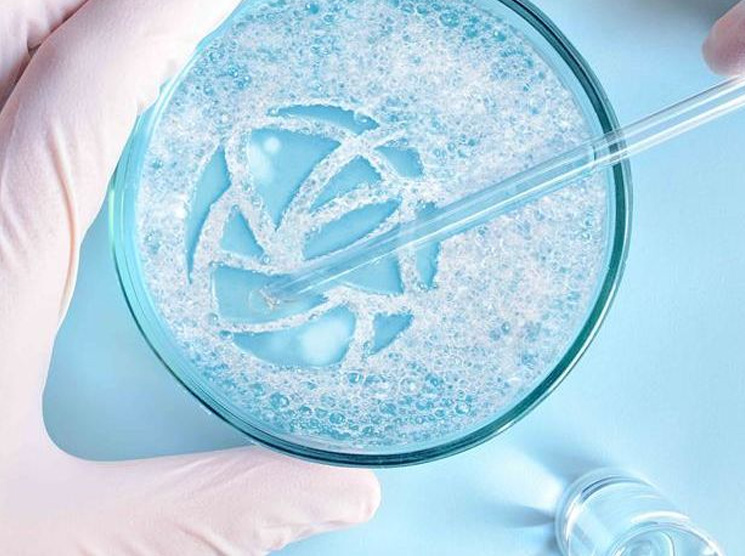
There are many kinds of Defoamers and they are widely used. The process of “foam suppression” and “foam breaking” of the defoamer is: when the defoamer is added to the system, its molecules are randomly distributed on the surface of the liquid, inhibiting the formation of an elastic film, that is, terminating the generation of foam. When the system produces a large amount of foam, add defoamer, its molecules immediately spread on the surface of the foam, spread rapidly, form a very thin double film layer, further diffuse, penetrate, and invade in layers, thus replacing the thin wall of the original foam film. Due to its low surface tension, it

swimming-pool-PH

The standard and influence of PH value in swimming pool

The change of the pH value of the swimming pool will directly affect the change of the water quality. High or low will not work. The national standard for the pH value of the swimming pool is 7.0~7.8. . Next, let’s take a look at the impact of the pH value of the swimming pool. The PH value of the swimming pool is mainly affected by the following points: If the ph value of the swimming pool is lower than 7.0, it means that the water quality is acidic. Then the Disinfectant in the swimming pool will decompose quickly and the residual chlorine will remain for a short time. In

Decoloring-Agent

What is Decoloring Agent?

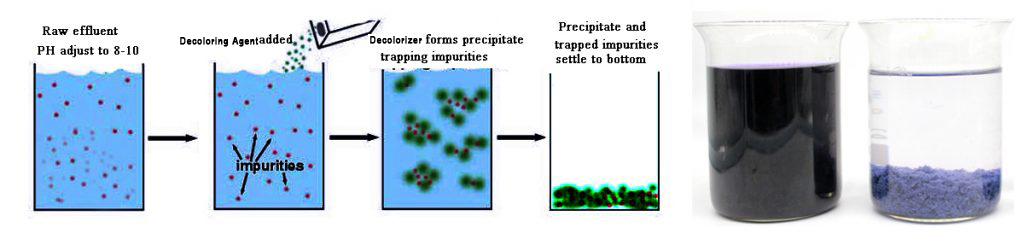
Wastewater Decolorizer is a kind of treatment agent mainly used in industrial wastewater. It is aimed at the colored group components in wastewater. It is a water treatment agent that reduces or removes the chroma in wastewater to achieve an ideal state. According to the principle of decolorization, decolorizers can be generally divided into three categories: flocculation decolorizers, oxidation decolorizers and adsorption decolorizers. Oxidative decolorizing agent mainly uses its strong oxidizing property to destroy the colored groups to achieve the purpose of removing chroma, while adsorption decolorizing agent removes chroma through its own pore adsorption. These two methods have many limitations and disadvantages and are not suitable for large-scale It

Sewage treatment coagulant and flocculant have good effect when used together

In Coagulant (Polyaluminum Chloride, commonly known as water purifying agent, also known as polyaluminum chloride, polyaluminum for short, PAC) and Flocculant (polyacrylamide, belonging to high molecular polymer,  PAM) Under the action, the suspended matter undergoes physical flocculation and chemical flocculation, thereby forming large suspended matter flocs. Under the buoyancy of the bubble group, the “floccules” float to the liquid surface to form scum, which is separated from the water by using a slag scraper. Cleaning the nozzle will not cause clogging, and the use of coagulant and flocculant in sewage treatment is effective. Coagulant (polyaluminum chloride, commonly known as water purifier, also known as polyaluminum chloride, referred to as polyaluminum,

Environmentally friendly chemical additives for water-based Defoamers

With the advancement of science and technology and the rapid development of economy in our country, we living in the 21st century are becoming more and more aware of environmental protection, and we are eager for a healthy living environment. As an environmentally friendly chemical additive, water-based Defoamers are most prominent in their application in water-based coatings. Previously commonly used oil-based paints mostly used organic solvents and vegetable oils as solvents, while water-based paints used water instead of organic solvents and synthetic resins instead of vegetable oils. Because of their safety, sanitation, and environmental protection, they were widely used by many companies. The popularity of water-based coatings has brought huge